Free 5 part e-course on managing your stress!

Coming Soon!

Tuesday

Stress and Congestive Heart Failure: A Deadly Combination

WISE, VA- JULY 22:  Velma Willis and her son C...Image by Getty Images via Daylife


Controlling stress is a vital part of managing congestive heart failure. Implementing tactics to remove or minimize stressful situations in your life will make symptoms easier to control and lead to a longer, happier life.


Stress is a formidable force in the lives of many people in this world today. While stress may not seem to permanently affect people, it is a very serious cause and/or aggravation to medical conditions a person has. First, it is important to discuss what the true definition of stress is. If asked, the average person on the street might say that stress is anything that causes worry to one’s life. They might give examples like arguing with a spouse, financial problems, or children’s bad behavior. While these are examples of one kind of stress, stress is also much more. By definition, stress is the body’s reaction to change that requires any kind of change or response. Besides emotional and mental reactions to these changes, the body experiences physical responses as well. Stress is a very normal part of life and depending on how one reacts to it, can be positive or negative. While this is true, many people let stress affect them negatively.

The human body is capable of experiencing stress and reacting to it. A way that stress can be positive is to keep people on their toes and ready for anything. However, if stress is taken the wrong way, it becomes negative. One way that stress can become a negative influence on a life is if a person begins to go through continuous challenges that prove stressful and has no respite from these challenges. While a human being is emotionally capable of handling stress, seemingly endless tests of our strength may discourage a person and start affecting their health in a negative manner such as the person becoming over-worked or extremely tense.

This type of unrelenting and continuous stress can be very destructive. This can lead to a condition called distress, a negative reaction to stress. Such physical symptoms that can ensue with distress are headaches, upset stomach, insomnia, high blood pressure, and chest pain, just to name a few. Medical studies show that it is possible that stress can cause or worsen symptoms of diseases. If stress is not reacted to in a calm and rational manner, it can definitely be a force to be reckoned with. The statistics of how many people are vulnerable to the negative effects of stress are surprising.

Forty-three percent of adults suffer from adverse health effects in connection with stress. Surprisingly, people do take their sufferings to the doctor, because 75-90% of doctors’ visits are related to symptoms and ailments of stress. Not only is stress a danger on a personal level, but the Occupational Safety and Health Administration has declared stress a true hazard of the workplace. Not only does it cost the employee money, but American industry loses $300 billion annually due to stress. The existence and or lifetime continuation of emotional issues is greater than 50% due to unresolved stress issues. Stress can also make diseases like diabetes, high blood pressure, asthma, and heart disease worse.

Congestive Heart Failure (CHF), in short, is a condition of the heart when the heart does not have the capability to pump blood properly. This condition is caused in large part by unhealthy diet, unhealthy lifestyle, and heredity, among other things. This serious and life-threatening disease is exacerbated by the existence of stress in the life of someone diagnosed with it. If stress has such an effect on otherwise healthy adults, imagine the incredible emotional, mental, and worst of all, physical consequences of stress on someone lacking complete functionality of his or her heart. Stress can make a huge difference in the longevity of the life of a person with CHF. It is so very important to minimize situations that are inductive to stress so that the quality of life is tolerable for the patient. Being diagnosed with Congestive Heart Failure, an incurable disease, is difficult enough without adding the pressures of excessive stress into his or her life.


Reblog this post [with Zemanta]

Saturday

Stress and ageing on the immune system

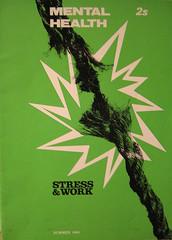
Mental Health: Stress and WorkImage by xeeliz via Flickr

As ageing is associated with immunological changes, the effects of stress and age are interlinked where a deregulation of the immune function can have a significant impact on physical health. On the other hand stess can both enhance and increase the effects of aging, with older adults often showing greater immunological impairment to stress than younger adults. Therefore a good immune response is essential to our good health. In the same way immunological alterations and disturbances can influence the progression and severity of a variety of disorders and diseases, including stress related disorders.

Also stressful experiences very early in life can alter the responsiveness of the nervous system and immune system. It is possible that prenatal or early life stress may increase the likelihood of altered immune responses to stress in late life. One such alteration to the immune system includes a decrease in the ability of white blood cells (immune cells) to carry out their key functions. One great example is temporary stress as seen in students during “examination stress”. This has been seen to slow down wound healing.

Children of mothers who are routinely stressed during their pregnancy show decrease in immune function compared to children of undisturbed pregnancies. Similarly young children who experience abuse or neglect show abnormal cortisol levels indicative of a dysregulated stress response.

Cortisol is a hormone secreted by the adrenal glands and involved in glucose metabolism, blood pressure regulation, maintenance of insulin release, suppression of inflammatory responses. Cortisol is elevated following several stress disorders. Several stressful experiences can cause in areas of the brain involved in memory an “imprinting” during fetal development and early life can alter the responsiveness of the endocrine, immune, and central nervous systems for many years.

An understanding of such interlinked effects of stress and age is important to understand and to determine the mechanisms involved, so that we can develop effective interventions in early and late life.


Reblog this post [with Zemanta]

Is the term "Anxiety Disorder" over used?

Description unavailableImage by tozofoto via Flickr

The term "Anxiety disorder" has become a jacket term, covering many unique forms of abnormal anxiety, fears, phobias and nervous conditions. All of these conditions come on suddenly and prevent an individual from continuining daily routines.


Of the several different types of anxiety disorder these are the most common:

- Claustrophobia

- Social anxiety

- Specific phobias

- Obsessive-compulsive disorder

- General anxiety disorder

- Post-traumatic stress disorder

- Agoraphobia

- Panic disorder

- Separation anxiety disorder


Usually all of these disorders or conditions are chronic, and lifestyle restricting. Alot of times individuals will be born with their condition, but it is also known that they can begin suddenly after a triggering event. Stress is a known factor which will increase in their persistence.


There are several drugs available on the market that treat these disorders. They are drugs like benzodiazepines and antidepressants.

A good counselor or behavioural therapist is often able to treat the disorders through use of cognitive therapies.


It is important to know that anxiety is a complicated combination of the feeling of fear and worry. It can occur as a primary brain disorder, but is often times associated with other medical problems. Anxiety is most of the time said to have a cognitive, an emotional, a somatic and a behavioral component. All of these components make up the whole, which is Anxiety.

In it's chronic state Social Anxiety Disorder can be disabling, and prevent individuals from completing daily tasks, although with the help of drugs and therapies many of these individuals can battle the disorder and continue on with their lives.


Reblog this post [with Zemanta]

Friday

Dealing With Your Stress, Anxieties, And Your Fears

MIAMI BEACH, FL - JUNE 11:  Brittany Ganson (L...Image by Getty Images via Daylife


It is not easy to deal with your fears, anxieties, or any type of stress disorder. If you have such a problem, the first step is that you should talk to a professional who can get you started in the right path of getting better. Getting help from a counselor or other professional is very important and can provide you much help and insights in dealing with your current problem. Getting help from a professional should be the first thing you do in getting better. In the meantime, here are some techniques a person can use to help manage their fears, anxieties, and other issues.


Learn to take it one day at a time. Instead of worrying about how you will get through the rest of the week or coming month, try to focus on today. Each day can provide us with different opportunities to learn new things and that includes learning how to deal with your problems.

Focus on the present and stop trying to predict what may happen next week. Next week will take care of itself.

A good way to manage your stress is to challenge your negative thinking with positive statements and realistic thinking. When encountering thoughts that make you fearful or anxious, challenge those thoughts by asking yourself questions that will maintain objectivity and common sense.

When facing a current or upcoming task that overwhelms you with a lot of anxiety, the first thing you can do is to divide the task into a series of smaller steps. Completing these smaller tasks one at a time will make the stress more manageable and increases your chances of success.

Sometimes, we may be nervous doing a certain task that may be scary. When this happens, visualize yourself doing the task in your mind. For instance, you and your team have to play in the championship hockey game in front of a large group of people in the next few days. Before the big day comes, imagine yourself playing the game in your mind. Imagine that your playing in front of a large audience. By playing the game in your mind, you will be better prepared to perform for real when the time comes. Self Visualization is a great way to reduce the fear and stress of a coming situation.

Sometimes we encounter a scary situation that gets us all upset. When encountering these events, always remember to get all of the facts of the given situation. Gathering the facts can prevent us from relying on exaggerated and fearful assumptions. By focusing on the facts, a person can rely on what is reality and what is not.


As a Layman, I realize it is not easy to deal with all of our fears and other problems, however there are all kinds of help available. Remember to take advantage of the help that is around you. The key is to be patient and not to give up. In time, you will be able to find those resources that will help you with your problems.


Reblog this post [with Zemanta]

Tuesday

Effective Steps for Managing Anxiety

Have you ever been in a situation that brought on sweats, rapid heartbeat and shortness of breath? You probably weren’t having a heart attack but an anxiety attack. If you suffer from anxiety disorders, learning to manage it is the first step to overcoming it.

Anxiety is characterized as extreme reactions to fearful situations. When someone follows you into a dark alley, those anxious feelings of a racing heartbeat and sweaty palms gives way to heightened senses and a rush of adrenalin that can save your life. This is the fight or flight syndrome.

In the case of frequent anxiety, the fearful feelings are dread of a particular situation and not the situation itself. Getting caught in traffic can cause an anxiety attack over what might happen when you get to work late. Starting a new job can bring on anxiety attacks. You don’t know anyone and fear of that unknown can send you into a panic.

Everyone experiences panic or anxiety in small ways. Like the fight or flight example, it can save your life. In new situations, we get panicky but when the outcome we fear fails to materialize, the anxiety stops. For someone with chronic anxiety, this is not the case.

Every situation that brings anxiety is not life-threatening. More than likely it is an extremely stressful situation that has brought on the anxiety as a way of dealing with it. Unchecked anxiety of this type can lead to depression.

If you suffer from anxiety attacks on occasion or a more frequent anxiety disorder, there are steps you can take to keep your anxiety under control.

1. See a professional. This is always a good first step. Self-diagnosis of any type of physical or mental condition is unwise and can be dangerous. A professional psychologist can help you understand your anxiety and prescribe medication or other effective techniques.

2. Get a good night’s sleep. During the sleep cycle, your body repairs itself. You feel more rested after several hours of restorative sleep, reaching the REM stage. Most people need eight hours a night which varies within an hour or two each way.

3. Exercise on a consistent basis. Exercise helps you to use oxygen more efficiently. It helps to get more oxygen to the brain. It also increases focus which may help you see solutions to problems rather than simply worrying about them.

4. Meditate. Meditation is more than chanting mantras. Yoga is an exercise that involves quieting the mind and controlling your breathing. Simple mediation such as taking 5 minutes to clear your mind everyday can work wonders in the fight against anxiety.

5. Manage the worry. When you feel your pulse start to quicken, count backwards from ten. As you count, focus on the situation. What has actually happened? Resist the urge to read anything more into the situation.

6. Don’t use alcohol. You might think that the glass of wine is relaxing your tension but alcohol is a depressant. In anxious situations you could rely too heavily on it and gain another problem in the process.

7. Find some relaxing activities. Stress can rob you of your energy. On a regular basis, do something you like such as gardening, painting, reading or listening to music.

Anxiety can come into your life at any time. It’s normal. When the anxiety becomes frequent you could be at risk for more serious conditions. If you feel your anxiety is starting to take over your life or increasingly causing you problems, seek professional help immediately. There is no need to suffer this terrible condition in silence.


Reblog this post [with Zemanta]

Relaxation Cds

As I was working on an article that will soon be completed and posted :), I found a really good supplier of relaxation cds.

Personally I like to listen to the relaxation cds when I am stretching or working on my martial arts forms. The music is not intrusive so I can concentrate and it is relaxing!

Any way I thought I'd pass this link on to you before I forgot.

Discover the ULTIMATE Relaxation CDs - Guided Relaxation CDs, Sounds of Nature, and Brainwave CDs. All $24.95, with FREE int'l shipping, FREE screensaver and FREE MP3 version. Learn more >>

Until next time,
Take care and be safe!

Mr. Don

Friday

Positive Self Talk- Why?

In today’s post I’d like to review a technique that is very effective in helping to manage stress. Using positive self talk is a way to focus your internal conversations, those ones you have with your self when you are alone or just deep in your own head.

We are very quick to point out our short comings to ourselves. We are not so quick to tell ourselves what we can and will do in a meaningful way. Lots of times we set our goals like they are must do’s rather than charging into them so that we can begin to experience the benefits!


Using Positive Self-Talk to Conquer Any Goal

Do you feel like you are always talking yourself out of success? As soon as you start to set goals for yourself, do you suddenly have nagging thoughts about how you aren't up to the task or how you simply aren't qualified to carry it through?

If you have ever experienced either situation, you need to change the way you respond to your inner dialogue. Instead of obeying your negative commands, you can use positive self-talk to counter the negativity and overcome nearly all anxious thoughts.

Setting Goals and Sticking to Them with Positive Self-Talk

Are you initially filled with excitement when you first set goals for yourself? Are these thoughts then followed by self-doubt and self-defeating thoughts that stop you in your tracks before you even get started?

It can be difficult to make the most of your life when you are constantly talking yourself out of being a success. It can be frustrating and discouraging to have these thoughts constantly plaguing you. Many of us, in fact, don't even realize we have them! All we know is that we don't have the confidence to stick to our plans and reach our goals.

But there's another way!

Positive self-talk is an effective way to set goals and ensure that you stick to them, even if you have never been able to do this before. The way this works is that you decide what goal is important to you, and then you plan the logistics of how you are going to attain this goal. When self-doubt starts kicking in, you will respond with affirmations that prove your success without surrendering to the negative pressure. Since you're reading this article, it's clear that you're no quitter and you're certainly not a failure, so start believing in yourself!

Re-Programming Your Mind

Affirmations are essentially positive statements that re-program your mind for the positive. The moment you have a self-defeating thought you'd be able to counter the negative with a motivating statement. An example of a positive affirmation is: "I am worthy of great success," or "I see myself in the winner's circle." What this does is replace negativity with thoughts that will help you move toward your goals instead of further away from them.

Positive self-talk is easier to implement than you might think. You may not be aware of the severity of the negative dialogue currently within your mind. However, once you begin with positive self-talk, you will suddenly realize that you are self-sabotaging the goals you set for yourself from the minute that you make them. This process can open your eyes to exactly how much this inner conversation has been interfering with your life. You'll feel hopeful that you can now set goals and surpass them.

Through positive self-talk you will be able easily set long and short-term goals for yourself. And when you use affirmations, you'll have accessible tools to help you push yourself further than ever before. Learning to quiet negativity with positive thoughts is a great move toward setting and attaining future goals with ease.

While implementing positive self talk is very easy, (just do it!) what is harder is doing it on a consistent and repetitive basis.

That’s it for this one!

Until next time,
Take care and be safe!

Mr. Don

Monday

Grab a Cat Nap and Say Goodbye to Stress!

Sleep deprivation is one of the biggest causes of stress in our lives, and when we’re stressed, the problem exacerbates itself because stress causes insomnia. If you feel unusually fatigued during the day, you might not be getting the kind of sleep that affords you good health.

There is a way to give yourself a counter-balance to a less than restful nights sleep.... a cat nap!

Cat naps re-energize you so that you feel alert, you think better, perform better, and you can handle stress better. Companies like Nike are now embracing the idea of a cat nap, also named a power nap.

When you don’t get a cat nap during the day, your judgment is impaired. Not only for driving, but for your reactions with situations where you’re dealing with too much stress, such as a debate with a co-worker or a disagreement with your spouse.

Your motivation and patience is compromised, as well. A tired person doesn’t feel like making any extra effort, so when something else is piled onto their task list, the stress it causes is immense compared to someone who is rested, alert, and able to handle the additional workload.

All it takes is 20 minutes to reduce aggression and moodiness. Don’t think you can just tack on 20 more minutes to your nightly sleep schedule, either – it doesn’t benefit you as much as a mid-day power nap that helps you recover from the 8 hours of work you’ve just completed.

If you are not able to grab a quick cat nap, try to practice some stress management exercises or some yoga stretches to re-energize.

Don't let stress drive you to say or do something that you could regret when it is easy to manage in little ways! Check out our stress management resources!

Until next time,
Take care and be safe!

Tuesday

Are You Experiencing Over-Achiever Stress

Are you suffering from over-achievre stress? It is not always easy to tell, but here are some sure ways to tell if your stress engine is running in high gear!


  • Do you rely heavily on getting things done and get edgy and cranky if something gets in your way?
  • Do you go into a panic if you don't have your cell phone?
  • Does not having access to a computer send you over the edge?
  • Is your "to-do" list catagorized, color-coded and indexed?
  • Is your appt. book filled for the next 3 months?

Lets face it, if you responded yes to even one of those questions, you may be experiencing Over-Achiever stress.

You are causing yourself an unbelieveable amount of stress, as you well know. You also know the physical and psychological damage that you are doing to yourself.

The question then becomes, what are you going to do about it? How can you take active steps to manage and lessen some of the effects of stress?

One quick and simple thing to begin to increase your awareness is to make your de-stressing time a MUST DO on your to-do list! If you know how much your list means to you than use that to your advantage. Schedule some down time or stress management exercise time into your day! If you put it on your list you WILL get it done because its on the list!

Once you get it done, you can feel good not only about have done it, but now you get to cross one more thing off your list.

If you would like to learn more about easy ways to manage and identify your stress or that of a loved one, be sure and check out How to Win Your War Against Stress. It is a nuts and bolts approach to Stress Management. You won't find pictures of peaceful islands or pretty sunsets. What you get is a huge resource that you can use to effectively manage the demands of your day in ways that promote good health and wellness. (Priced at $6.95 this is the only type of ad that you will see for it! I told you it was a bare bones report!) You will beable to download it right away for reading on your computer, or it prints out really well so you can put it in a 3 ring binder for reading when away from you computer.


That's it for today!

Until next time, take care and be safe!

Mr. Don

Safe Kidz

Mom~Z~Mean Business

Friday

Learn How to Reduce Stress and Be Happy

Anything taken too the extreme is bad for your health. A little stress is actually good, as it could serve to help you function at your best. It gets your blood pumping and heart racing!

However, stress that seems a little too much can take a physical, as well as mental, toll on your body. Stress can be and should be managed in order to keep depression or anxiety at bay!

So what can you do about it then? The following are tips and advice can get you started in managing your stress.

Write it down and schedule it to get it out of the way.

It is best to write down everything that seems to be overwhelming. You will find a things-to-do-list much easier to manage than having all of your errands crumpled up in your head. Writing down the tasks, and putting a specific schedule and time to do them, helps anyone manage activities one chunk at a time. Crossing out an activity that has already been accomplished is very rewarding and could actually help you feel more relaxed when doing the other tasks at hand. (My wife gets a big kick out of marking things off her todo list with different colored highlighters! I have no earthly idea why, I just know it works for her!)

Focus, Focus!!

Focus and put all your attention specifically on one task at one time. While we all want to think that we are great multi-taskers, research is beginning to show that while we may be able to do more than one thing at a time, both the quality of work goes down and the time it takes to actually complete a task, takes longer, because we have to go back and clean so much up to finalize the project! It also does not help to feel panicky about the other undone tasks. Thinking about them only adds unnecessary stress and could even hamper in doing the task you are attempting to accomplish at present. Focus and complete one task before moving on to the next!

Relax and take it slow.

At least, try not to expend too much energy on activities that are currently not priorities. This is in order for your energy to not get burned up on the tasks that are not that important, at least for now. Lets face it, we only have 24 hours in a day, probably only 10 hrs of actually being productive if we are lucky. Don't waste your time and energy running around attacking non-important busy activities!

Delegate, delegate, delegate.

You need not do everything all at once, and you need not do everything on your own. Ask for help, get help, or pay for help. When there is a feeling of being overwhelmed cropping up, hire someone to mow the lawn or get a sitter for your children. The feeling of being pressed to finish something on time will somehow be eliminated if smaller tasks are delegated. It takes a load of unnecessary worry and anxiety off your shoulders. Moreover, it is easier checking up on how things are, than worrying yourself sick doing everything on your own, all at once.

Give yourself a reward.

You deserve it. Acknowledging your accomplishments, no matter how big or small, is an effort that is necessary before getting on to the next tasks and activities. It reduces stress and could even make you happier in doing the next task. It really reinforces you to continue on tackling your tasks one at a time when you give your self a little treat to celebrate! Its worth it in the long run, so don't cheat yourself.

Give yourself a break.

You need it to be more productive. A ten to fifteen minute break during your work is necessary. Go visit a café nearby, take a quick brisk walk, or do anything to put your mind off work, at least for a while. This is necessary to refresh and recharge. Believe it or not, you can also stay in your work and sit with your eyes closed as you visualize a peaceful landscape or a relaxing scene. This frees the stress from your muscles and your mind. (A brisk 5 minute walk 2 or 3 times a day will help manage your stress and improve your fitness while pumping blood through the brain to improve your productivity!

Relax and be cool. Doing so makes you healthier, happier, and a lot more productive.

Wednesday

No more panic attacks or anxiety... EVER!

The other day after class one of my student's mother approached and asked if I know of anything that could help with anxiety attacks. As a mental health counselor I used to have to spend several sessions with clients before we could begin to get a handle on them.

Since then I have found a better way that many have reported as being successful in helping them overcome and manage thier anxiety. The beauty of this is that it doesn't take weeks or months of therapy.

Is it perfect and does it work for everyone? Nothing is perfect and nothing works 100% of the time, but this resource will show you simple ways to behaviorally take control of your panic.

But, let's start at the beginning!

Do you or does someone you love suffer from panic attacks?

Here's how to tell...
...you feel dizzy...
...there is a tightness in your throat and chest...
...you're short of breath...
...your heart is racing...
...your mind is full of worry and dark, unwanted thoughts.

If so, you're not alone.

Some people can suffer anxiety and panic attacks in almost any
situation.

Others find that their anxiety is triggered by particular events
such as driving, public speaking, crowded areas, etc.

The number of people who suffer from panic attacks is at an all
time high...

...and modern medicine is CLUELESS on how stop the attacks.

Deep breathing doesn't work.
Positive affirmations don't work.
Time consuming 30 step programs don't work.
Expensive doctor and therapy visits don't work.

But there is a solution...

It's called Panic Away.

Learn more.....

And after 7 years online, panic away has become a leading drug
free treatment of panic attacks and general anxiety...


"I actually haven't had a panic attack since I have read your
book, it truly does work." -Jerry Fischer, Denver, USA


"...it not only worked but it took away all my general anxiety
and panic attacks because of your program." --Tanya Ajayi


Panic attacks become self-perpetuating, because the fear of
having a panic attack will actually BRING ON another attack.

Panic Away works by teaching a technique that breaks the cycle of
anxiety and returns you to normal everyday living.

To get results, there is no need to regress into the past and
find out why you had your initial panic attack.

You just need to be willing to break out of the anxiety cycle.

Learn how.....

If you're not sure if you could benefit from Panic Away, let me
ask if you've experienced any of the following...

--A bodily sensation that disturbs you (racing heart, tingling,
fear, perspiring profusely for no reason, shortness of breath,
tightness in chest or throat, etc.)

--A mental worry or repetitive anxious thought that lasts for
more than a few seconds.

--Fear of an everyday situation like eating out, speaking in
public or driving.

There are many different manifestations of anxiety, but no matter
what type of anxiety you have, this course can help you.

Its results are fast.

You can read the entire course in a few hours and be implementing
the technique by the end of today.

See how easy it is.....


Until next time, take care and be safe!


Mr. Don

P.S. What's it worth to you to never feel anxious again?

To never be afraid to do something, or go somewhere?

What's it worth to have your life back?

Read the stories of people who have done exactly that...

Learn more.....

Tuesday

Simple Ways to Effectively Control Anger

Anger is a negitive emotion that in and of itself creates alot of stress! We walk around and stew on the event that made us angry. We think about the things we could have said or done and can visualize the devestation that our verbal or physical come back could have done!

Maybe, but in the mean time we are still all stressed out about and devoting a lot of attention and energy to it!

Strong emotions like anger can affect your physical well being. Because of anger, you may experience chest pains, upset stomach, heart palpitations, difficulty in breathing, dizziness, high blood pressure, and other health problems. Because of these, you need to find ways to effectively control your anger.

There are ways to deal with anger and here are some of the effective ways:

Determine the source and cause of anger. A strong emotion has to be resolved first. Unresolved anger escalates, and bitterness will show in your interaction with other people. Diffuse anger and it will relieve the stress in your system.

To vent anger, try exercise. Go jogging or head to the gym. One quaint restaurant in the Philippines has a unique feature that provides an opportunity to vent anger. After a meal, customers are led at the back lot lined with walls, and on one side are stacks of inexpensive plates.

This area is for customers who wish to vent their anger by throwing the plates against the wall. They can throw as many plates to their heart’s content just to release negative feelings. Of course, they will have to pay for the plates; but the price they pay compared to the benefit they get is worth it.

Warning: Never vent your anger to outlets when you have health problems. Your blood pressure might rise up abnormally.

Talk to a friend. One of the best approaches to manage anger is to talk and confide to others. You may talk to a friend, counselor, or selected group with a common purpose to help each other. Talking to somebody about the feelings you have in your heart relieves tension. It is like unloading a heavy burden.

It is not necessary that an advice be given. Just lending a listening ear is enough. Advice may be given if it is sought. It opens your mind to new ideas and perspectives that you may not have thought of due to the anger you have within.

In a group therapy, other people can help you. In the process, you can also help them when it is their turn to talk, and it is your turn to listen and show concern. A listening ear helps dissipate the amber of anger. At the same time, it rekindles gentleness in the heart.

Learn to forgive. By far, the best way to let go of anger is to learn how to forgive. Forgiving may take a lot of effort. You may find it difficult to forget the hurt and anguish you went through. It takes a lot of convincing on your part, but it can be done. Forgiving releases you from the power other people have over you.

One technique you can try is the angry letter technique. Write a letter to the person who has caused you anguish and pain. Write in detail what he did and its effects on you. Feel the pain and anguish as you are doing the letter. In the end, write “I forgive you for all the pain you caused me. I wish you well.” Burn this letter and feel the release of negative emotions.


If you care about your physical well being, learn to control your anger. Try these simple steps and enjoy a healthy life!

Sunday

Here is a quick video to check out!


Learn how to manage stress in a healthy manner

There are two types of stress which psychologists have termed Eustress and Stress. These are as different as two sides of the same coin. One is actually useful while the other is harmful to your body. If you are able to identify your type of stress, you can get a handle it and use it to your advantage. We can channel positive stress (eustress) into motivating us to accomplish many things in our lives that important to us.

Eustress is an anxious feeling that's more akin to anticipation than dread. You may experience eustress before giving a presentation at work, before going on a job interview or when preparing a gourmet meal from a recipe you’ve never tried before. While the specific out come is unknown, you are approaching it with a sense of "positive expectancy". That is you are excited about believing that it will go well and turn out the way you think it will. It is energizing and exciting!

Stress, on the other hand, is anxiety, fear, frustration and an overwhelming sense of dread.
Job burnout is the result of working too long in a stressful environment. This is the stress that will kill us! There’s nothing useful about stress. It's the warm-up act for a heart attack, stroke and emotional breakdown.

As busy adults we know we need to manage our harmful stress to avoid it's negitive consequences. Engaging in the activities that we know we should be doing gets put on our "soon to do" list, which unfortunatly gets pushed further back as more and more "must do" things enter our lives!

This space is going to provide its readers with ways that you can use stress management techniques that are not going to add to your stress level. It isn't hard to incorperate effective techniques into your daily life. The secret is to do a little bit every day!

No matter what you do to manage your stress, if it only takes up more of your already limited time, you probably won't do it much, and certainly not enough to be effective.

If you would like to learn how to immediatly begin to manage your stress in a more productive manner sign up for our free e-course or join our membership and make the commitment to become a less stressed, healthier and happier you!

Until next time, take care and be safe!

Mr. Don